| Possible cause | Typical signs | What tends to help |
|---|---|---|
| Plaque buildup along the gumline | Bleeding where brushing is rushed; a tender gumline | Gentle, thorough brushing twice daily plus daily flossing |
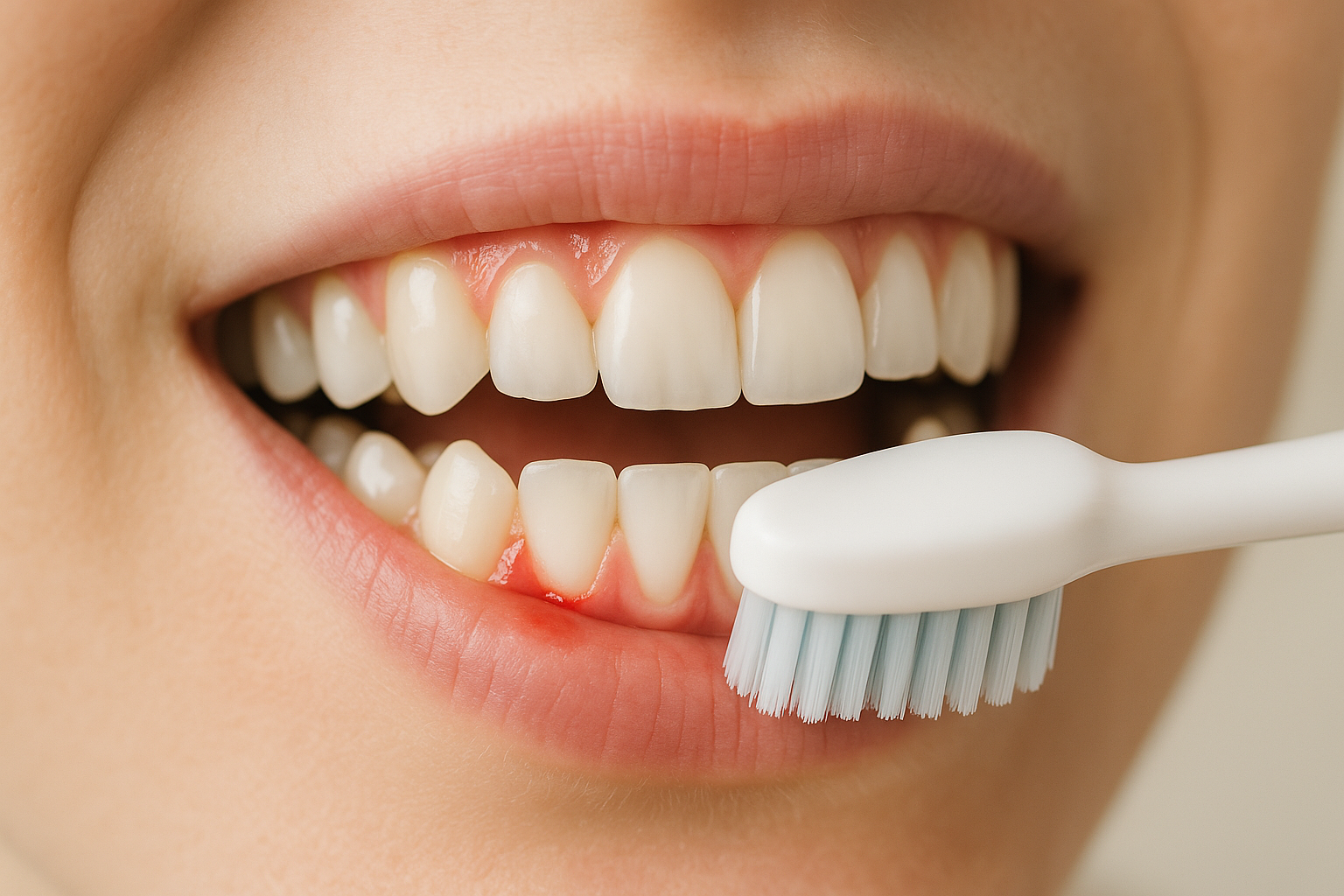
| Brushing too hard or stiff bristles | Bleeding alongside gum recession or sensitive spots | A soft-bristle brush, lighter pressure, brush angled at 45 degrees |
| A brand-new flossing habit | Brief bleeding during the first one to two weeks of flossing | Keep flossing gently and consistently; it usually settles |
| Skipping between-teeth cleaning | Bleeding between teeth where a brush cannot reach | Add floss or interdental brushes once a day |
If you brush every day and still notice pink in the sink, you’re not alone. Daily brushing is essential, but it can still leave structured plaque clinging right where your toothbrush skims past—at the gumline and between teeth. The fix is usually a few small technique changes plus consistent interdental cleaning.
Why do gums still bleed despite daily brushing?
Bleeding with brushing is your body’s way of telling you plaque has been left behind—especially along the gumline and in the tight spaces between teeth. Even diligent daily brushers can miss these sheltered spots if angles are off or time is short. That lingering biofilm keeps the gum edge irritated, so it bleeds when disturbed.
In my practice, the most common pattern is people brushing hard but flat, racing through in under two minutes, and skipping floss or interdental brushes. A stiff or splayed brush head makes matters worse by scrubbing the flat enamel while gliding past the curved gum margin.
Life stages also matter. During puberty, pregnancy, and menopause, gum tissues can react more strongly to everyday plaque. Some medicines, including blood thinners, can make bleeding more noticeable. The same routine that once seemed “good enough” may no longer keep the gumline calm.
96% of Dental Pro 7 customers reported visible improvement in gum appearance Source: 303 approved product reviews for Dental Pro 7 product line (2023–2025)
What brushing mistakes most often keep the gumline irritated?
Three habits account for most day‑to‑day gum irritation I see:
- Flat brushing: Holding the brush squarely against the teeth misses the narrow rim where tooth meets gum. A 45‑degree angle toward the gum edge lets the tips of the bristles sweep into that margin.
- Too much pressure with the wrong brush: A hard or worn brush scrubs surfaces you already clean well and skims over the curved gumline. Replace heads every three months—or sooner if bristles splay.
- No plan, rushed zones: If you don’t divide your mouth into small sections, inner surfaces (especially behind the lower front teeth) and the last molars often get neglected.
These aren’t character flaws—they’re small technique gaps with big effects. Fixing them usually turns bleeding around in a week or two.
How does dental plaque biofilm make bleeding more likely?
Dental plaque isn’t just “gunk.” It’s a structured biofilm: organized, layered communities with water channels and a protective matrix that lets it cling tightly to teeth. High‑resolution imaging on natural teeth shows how these communities anchor in sheltered niches, including near the gumline and between teeth (PMID 20195365).
Because of that architecture, quick passes or straight, flat strokes may glide over the surface without disrupting the biofilm rim at the gum margin. Between teeth, the biofilm is protected under the contact point—so brushing alone won’t reliably reach it.
Left undisturbed, the biofilm matures and becomes more tenacious. That’s why consistency matters: small, daily disruptions along the gumline and between teeth help keep the margin calmer and less likely to bleed when brushed.
Which daily steps (and in what order) actually help stop day‑to‑day bleeding?
The order you clean in matters. This is the routine I teach most often:
- Interdental cleaning first: Use floss for tight contacts and small interdental brushes where they fit. This exposes hidden plaque to the toothpaste and the brush.
- Angle‑focused brushing for 2 minutes: With a soft manual brush or a pressure‑sensing electric brush, aim bristles 45° into the gumline. Use short, vibrating strokes, moving tooth by tooth. Do outer, inner, and chewing surfaces.
- Gentle tongue clean: A quick, light pass improves freshness and reduces coating that can trap odors.
Focus on hotspots: the last molars, the inner surfaces of the lower front teeth, and any crowded areas. Spend an extra 5–10 seconds per site. Track progress for 10–14 days; most everyday bleeding linked to plaque control improves with steady technique.
As a supportive option in your daily routine, some people like to finish with a professional-strength, lipid-based gum care concentrate such as Dental Pro 7. Use it as directed, alongside brushing and interdental cleaning, not as a stand‑alone fix.
Can mouthwash help or hurt if my gums bleed?
Mouthwash can complement—never replace—mechanical cleaning. An antimicrobial rinse may reduce bacterial load after you’ve disturbed the biofilm with floss and brushing. If you prefer to rinse, use it purposefully, follow the label, and avoid rinsing with water right afterward so it can do its job.
Over‑use of strong antiseptic rinses can disturb the balance of the oral microbiome. A recent perspective even discusses potential systemic considerations with frequent use (PMID 39379282). Use for limited periods if advised by your dental team, and build your routine around physical plaque removal.
Herbal rinses are being studied for other oral concerns; early work exists on Azadirachta indica–based formulas for tooth sensitivity (PMID 39554682). If you choose a herbal product, follow clear directions and don’t rely on it as a stand‑alone answer to bleeding gums.
When should I see a dentist or hygienist about bleeding gums?
Daily bleeding that lingers beyond two to three weeks despite careful home care deserves a closer look. Hardened deposits (tartar) can lock biofilm in place and need professional tools to remove. Regular checkups also catch other causes, from plaque traps around old fillings to ill‑fitting dental work.
When to see a professional
If bleeding persists beyond 2–3 weeks of precise interdental cleaning and 45° gumline brushing—or if you notice loose or drifting teeth, gum recession, a bad taste or breath that lingers, or any sore areas—book an exam and a professional cleaning. Seek urgent care for facial swelling, fever, or pain that keeps you awake.
Authoritative guidance on bleeding gums and gingivitis is available from the NHS (NHS overview) and the American Dental Association’s evidence resources (ADA: Gingivitis). [1]
How do age, hormones, and medicines change what I should do?
Age changes teeth and supporting tissues in subtle ways—exposed root surfaces, tighter or looser contacts, and altered salivary flow can change how and where plaque accumulates (PMID 28032898). Adjust your tools and angles accordingly, and consider an electric brush if dexterity or eyesight is reduced.
Hormonal shifts during puberty, pregnancy, and menopause can heighten gum reactivity to everyday plaque. During these times, be extra deliberate with interdental cleaning and the 45° angle along the gumline. If you’re pregnant, regular cleanings and clear home‑care guidance are especially helpful.
Medicines matter too. Blood thinners and some other drugs can increase bleeding. Always let your dentist and hygienist know your medication list so they can tailor advice and plan maintenance visits that keep the gumline calm.
Could a stomach bacterium like H. pylori be linked to persistent gum bleeding?
It’s uncommon, but there are intriguing reports. One paper described complete resolution of resistant gum bleeding after medical eradication of Helicobacter pylori, suggesting a possible connection in select cases (PMID 29869386). This isn’t a routine cause, and it’s not where most people should start.
For the vast majority, precise plaque control and a dental evaluation are the first steps. If bleeding remains unexplained after careful hygiene and professional care, your clinician can coordinate with your physician to consider broader factors.
Frequently Asked Questions
Should I keep brushing the area if my gums bleed?
Yes—gently. Bleeding with brushing usually means plaque is present. Use a soft brush, aim 45° into the gumline, and add daily interdental cleaning. If bleeding persists beyond 2–3 weeks of precise home care, book a dental exam.
Is flossing or an interdental brush better for bleeding gums?
Use what fits the space and you can do well every day. Floss works for tight contacts; small interdental brushes clean larger gaps and around bridges. Many people benefit from a mix: floss for tight spots, brushes where they fit.
How long should it take for daily bleeding to settle after improving my technique?
Most day‑to‑day bleeding linked to plaque control improves within 10–14 days of consistent interdental cleaning and focused brushing. If it doesn’t, or if you notice recession, drifting teeth, or lingering bad breath, see your dental team.
Can an electric toothbrush reduce gum bleeding compared with manual?
A pressure‑sensing electric brush can help many people use the right angle and lighter force for the full two minutes. In my experience, it improves consistency and often reduces daily bleeding when paired with interdental cleaning.
Which toothpaste ingredients are best if my gums bleed easily?
Pick a fluoride toothpaste you like the taste of so you’ll use it twice daily. If your gums feel tender, choose a mild, low‑foaming paste. The key factor isn’t the paste—it’s thorough plaque removal along the gumline and between teeth.
Could vitamin C deficiency contribute to bleeding gums?
Severe deficiency can make gums prone to bleeding, but that’s uncommon in countries with varied diets. Focus first on precise plaque control and regular dental care. If dietary concerns persist, discuss nutrition with your clinician.
Conclusion
If this sounds familiar, the answer is usually simple: a resilient biofilm lingers at the gumline and between teeth when angles, tools, or timing are off. Interdental cleaning first, 45° gumline brushing for a full two minutes, and steady habits for 10–14 days usually calm day‑to‑day bleeding. If not, your dental team can pinpoint and clear the causes you can’t tackle at home and help you personalize a routine you can keep for life.
More articles from Dental Pro 7 Journal →
Related Research
| Metric | Finding | Source |
|---|---|---|
| Gum disease prevalence (US adults) | 47.2% | CDC, 2024 |
| Adults with severe periodontitis | 9.0% | CDC, 2024 |
| Link to systemic health | Established association | NEJM, 2017 |