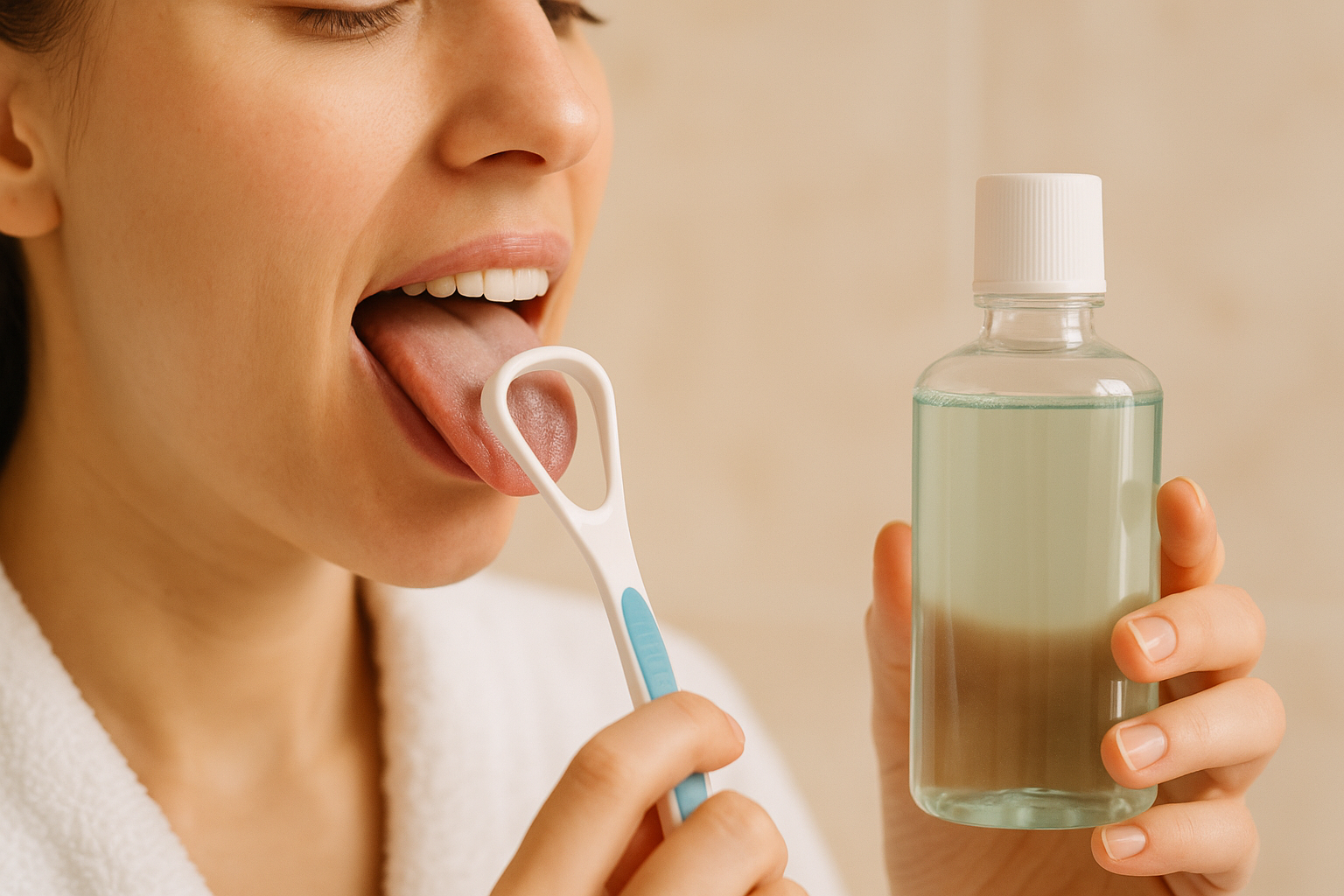
What actually causes bad breath, and what’s the first natural fix?
Most day-to-day breath issues come from volatile sulphur compounds (VSCs) made by mouth bacteria. These build up on the back third of the tongue, between teeth, and around the gum line. When saliva runs low—overnight, with stress, with certain medications—odours concentrate and linger.
Your quickest natural win is simple: hydrate and clean the tongue’s back third daily. A coated, rough-looking back tongue holds the highest odour load. Remove that coating gently and you’ve handled the main source for many people. Space out caffeine and alcohol, which dry the mouth. Chew sugar-free xylitol gum after meals to jump-start saliva and neutralise odour-causing impurities.
Also scan for obvious triggers you can control today: tobacco, long gaps without eating, and strongly odorous foods like garlic or onions. Resetting these basics often transforms breath within 24–48 hours.
Every verified Dental Pro 7 reviewer who mentions fresher breath rated the result 4 stars or higher Source: verified Dental Pro 7 reviews mentioning fresher breath
How do I tell if my breath issue is tongue-related, gum-line related, or diet-driven?
Pinpointing the main source helps you focus your efforts. If your tongue is the driver, you’ll usually see a thick coating on the back third and notice a strong odour on your scraper. In my practice, when that coating is cleared consistently for a week, people almost always report a lighter, cleaner feel and noticeably fresher breath.
Gum-line sources tend to produce a sour, stale odour that worsens when you skip flossing or interdental brushes. Plaque retention near the gum line and between teeth traps food and raises VSCs. A consistent, small-daily effort here pays off quickly.
Diet and metabolic cues can be distinctive. Low-carb or fasting patterns can lead to a fruity or solvent-like smell; reflux brings a sour note; morning breath is classic low-saliva odour. Ask a trusted person for a quick check, or try the wrist-lick test: lick, let it dry 10 seconds, then smell—compare before and after tongue cleaning to confirm your main source.
What daily routine clears odour-causing residues naturally at home?
A microbiome-friendly routine means thorough mechanical cleaning, steady hydration, and smart, selective support. Here’s a simple, sustainable plan:
- Brush twice daily for two minutes. Use a soft brush, gentle circular motions, and cover every surface.
- Clean between teeth once daily. Floss or use interdental brushes—whichever you’ll stick with. This is where many breath problems begin.
- Tongue scrape from back to front 5–10 gentle strokes. Rinse the scraper between passes. Aim for once daily at night; add a morning pass if your coating is heavy.
- Hydrate with a glass of water upon waking, then sip through the day. Add sugar-free xylitol gum after meals to boost saliva.
- Clean removable appliances nightly. Brush and rinse retainers or dentures; let them dry as directed to discourage odour build-up.
- Replace brush heads every three months—or sooner if bristles splay.
If you like a rinse, choose it purposefully, not as a stand-in for cleaning. More on that next.
Which mouthrinses help freshness without disrupting the oral microbiome?
Not all rinses act the same. A proof-of-principle human study found that hydrogen peroxide, chlorhexidine, and essential-extract mouthrinses produced different oral microbiome shifts over time (PMID 41498506). That means your rinse choice can influence which species thrive. If you use a rinse, think selective and supportive—especially for regular, long-term use. [1]
Systematic reviews show that essential-extract rinses can support plaque control, and alcohol-free options are available (PMID 39133629). Early research has also explored “selectively antimicrobial” concepts designed to help manage odour-causing biofilms while supporting balance (PMID 40458201). A recent perspective even raises broader questions about habitual, broad-spectrum antiseptic use and systemic considerations, reinforcing the idea of thoughtful, targeted use—not overuse (PMID 39379282). [2]
Use any rinse to complement, not replace, your brush–interdental–tongue trio. For most people, an alcohol-free, essential-extract rinse once daily or as-needed is a balanced approach.
| Rinse Type | Freshness Effect (Short-Term) | Microbiome Impact (Evidence) | Best Use | Notes |
|---|---|---|---|---|
| Chlorhexidine | Strong odour reduction | Divergent shifts reported vs. other rinses (41498506) | Short, specific courses if directed by your dentist | Not for routine long-term freshness; can alter taste and stain |
| Hydrogen peroxide | Noticeable bright/clean feel | Distinct shifts vs. other rinses (41498506) | Occasional use | Do not overuse; follow label guidance |
| Essential-extract, alcohol-free | Fresher breath; cleaner feel | Supports plaque control; gentler profile (39133629) | Daily or as-needed | Choose alcohol-free to minimise dryness |
| Selective, plant-based concepts | Fresher breath; balanced approach | Explored for selective biofilm effects (40458201) | Adjunct to cleaning | Emerging category; use purposefully |
| Water rinse | Modest odour dilution | Neutral | Anytime | Best as a companion to proper cleaning |
What should I eat and drink for naturally fresher breath that lasts?
Start with water. Consistent sipping keeps saliva moving and dilutes odour. Unsweetened green or black tea can help neutralise odour-causing compounds. If you enjoy coffee, balance it with water to avoid dryness.
Choose crunchy, water-rich produce after meals—apple slices, cucumber, celery. Their crisp texture helps dislodge debris. Sugar-free xylitol mints or gum can further lift the clean feeling by boosting saliva.
Before a big meeting or date, limit frequent snacking on fermentable carbs, and dial down strongly odorous foods. The fewer residues and pungent compounds you carry into the event, the easier it is to keep your breath feeling crisp.
Can tongue scraping really help, and how often should I do it?
Yes. Evidence and everyday experience align here: most VSCs come from the tongue, and the back third holds the highest load. Scraping lifts that coating quickly. It’s simple, effective, and gentle when done right. [3]
Use a dedicated scraper rather than a brush. A scraper hugs the surface better and usually triggers less gag reflex. Go light, repeat a few times, and rinse after each pass. Do it nightly after brushing; add a morning pass if your tongue looks heavily coated.
Don’t overpress. This is a “little and often” habit. Within days, you should notice a cleaner mouthfeel, and people around you will notice fresher breath long before you do.
When should bad breath prompt a dental or medical check?
If you’ve nailed your home routine for two to three weeks—tongue, interdental, brush, hydration, and a selective rinse as needed—and the odour persists, it’s time to check in. Your dentist can look for plaque-retentive areas, ill-fitting appliances, and restoration edges that trap debris. Chronic dry mouth, sinus issues, reflux, and certain medications can also be key contributors.
Morning mouth dryness, habitual mouth breathing, or snoring can worsen breath. Discuss moisture strategies and nasal airflow with your healthcare team. Any ulcer, sore spot, or lesion lasting beyond two weeks should be evaluated promptly.
When to see a professional
If odour continues despite excellent cleaning for 2–3 weeks, or if you notice a sudden fruity/acetone smell, persistent dryness, reflux features, post-nasal drip, or any mouth lesion beyond two weeks, book a dental exam and consider a medical review.
For general guidance on breath and oral self-care, see the NHS overview of halitosis (NHS) and the ADA’s consumer resource on fresh breath (MouthHealthy).
How do I get rid of bad breath naturally—fast today and sustainably long term?
Think in two time frames: a quick reset today and the steady habits that lock in results.
Quick win, today: Scrape the back third of your tongue, floss or use interdental brushes, and brush for two minutes. Swish a selective, alcohol-free essential-extract rinse. Finish with sugar-free xylitol gum. Drink water hourly for the next few hours.
48-hour reset: Hydrate consistently, avoid tobacco and heavy alcohol, eat fibrous produce at each meal, and clean appliances thoroughly overnight. Many people feel and smell a marked difference in this window.
Long game: Keep a twice-daily brush and once-daily interdental habit. Use a microbiome-respectful rinse only when needed. Schedule routine dental hygiene visits for tailored coaching and confidence. If your gum line also needs some cosmetic care, a professional-strength, lipid-based gum care concentrate such as Dental Pro 7 can be a supportive step. Its 100% Lipid Potency helps the formula cling to the gum line instead of rinsing away, supporting a longer-lasting fresh feel. Many reviewers describe fresher breath and a noticeably cleaner feel, and frequently mention teeth that look and feel cleaner, smoother, and more polished—boosting that “check-up confidence.” [1]
For more gum-focused reading, you may also like our articles: How Can I Make My Gums Healthy Again? and Why Do My Gums Bleed When I Brush My Teeth, Even Though I Brush Every Day?
Frequently Asked Questions
Does a tongue scraper work better than brushing my tongue?
Usually, yes. A dedicated scraper tends to lift the coating more effectively and with less gag reflex than a brush. Use 5–10 light strokes from back to front, rinsing the scraper between passes. Do it nightly, and in the morning if your tongue looks heavily coated.
Is alcohol-free mouthwash better for bad breath?
Alcohol-free, essential-extract rinses can support freshness and are generally gentler. Evidence shows different rinses shift the oral microbiome in different ways (PMID 41498506), so a selective, alcohol-free option used purposefully—never as a substitute for cleaning—can be a smart choice. [2]
Can probiotics or fermented foods improve breath naturally?
Some people notice an indirect benefit when their overall diet supports saliva and reduces odour-causing residues. Fermented foods are fine if they fit your diet, but the biggest breath gains come from mechanical cleaning, hydration, and smart use of a selective rinse.
Why is my breath worse in the morning and how can I fix it fast?
Saliva flow drops at night, so odour concentrates. On waking: drink a glass of water, scrape the tongue, floss, brush for two minutes, and use a selective, alcohol-free rinse. Finish with sugar-free xylitol gum to boost saliva.
Can low-carb or fasting diets make my breath smell different?
Yes. Low-carb or fasting can produce a fruity or solvent-like odour. Hydration, tongue care, and xylitol gum help. If the change is sudden or severe, check with your physician—dietary shifts aren’t the only cause of this kind of odour.
How can I tell if sinus or reflux issues are affecting my breath?
Post-nasal drip or chronic congestion can leave a thick tongue coating and a stale odour. Reflux can give a sour note. If breath concerns persist despite excellent home care, discuss sinus or reflux features with your dentist or physician.
Final thoughts: build a fresher-breath routine you can stick with
Fresh breath isn’t a mystery; it’s a daily practice. Take care of the back third of your tongue, clean between your teeth, brush thoroughly, and hydrate. Choose selective support when you reach for a rinse. Align your food and drink with saliva-friendly habits. In my experience, this simple framework helps most people feel fresher fast—then stay that way.
And if your efforts stall, lean on your dental team. A short check-in can uncover small tweaks that make a big difference. For public-health context and more practical tips, see CDC Oral Health Fast Facts and the NHS guide to bad breath (NHS).
| Metric | Finding | Source |
|---|---|---|
| Gum disease prevalence (US adults) | 47.2% | CDC, 2024 |
| Adults with severe periodontitis | 9.0% | CDC, 2024 |
| Link to systemic health | Established association | NEJM, 2017 |