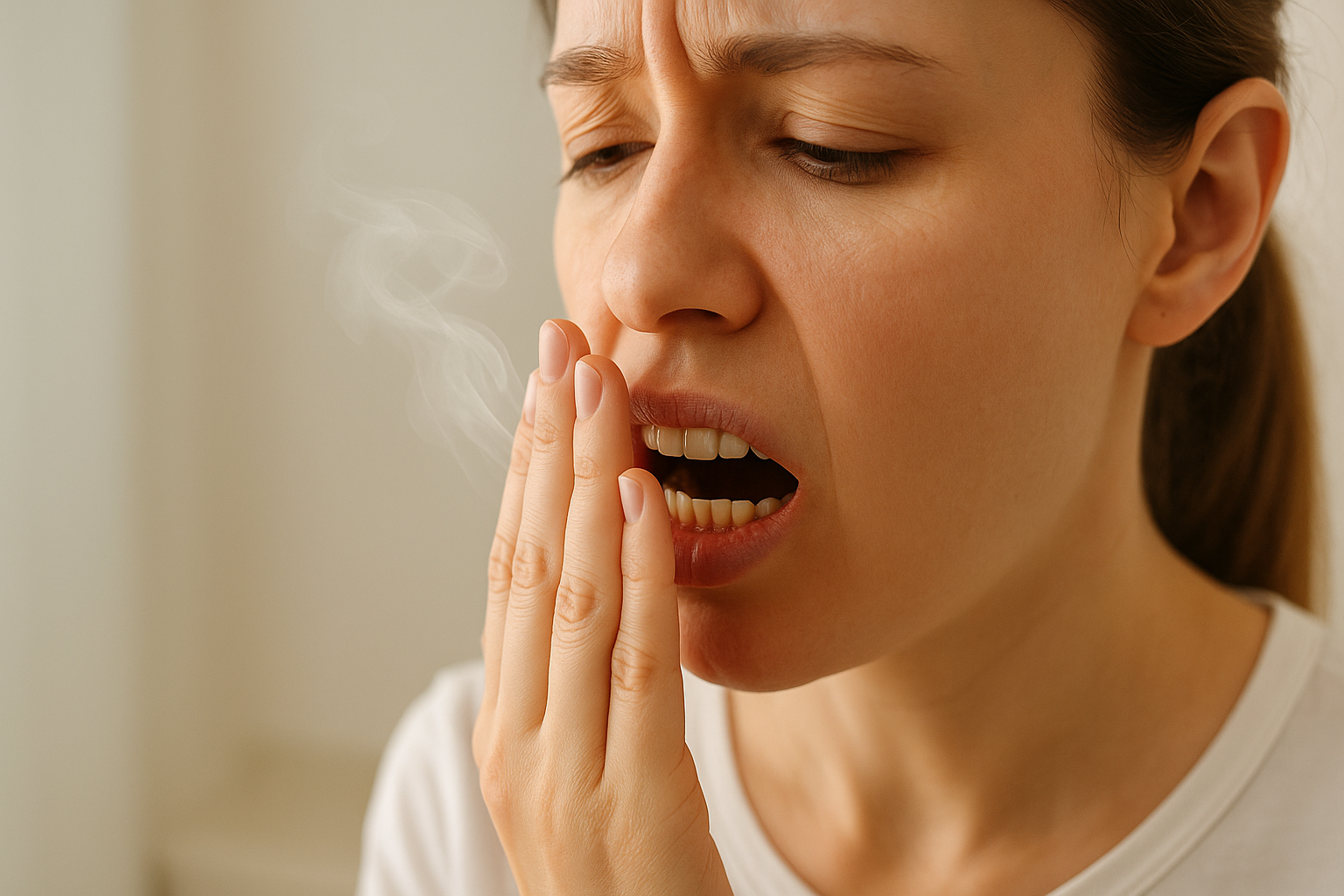
Ask ten people to describe gum-related bad breath and you’ll hear the same theme: a sulfuric, stubborn odor that lingers. In this expert guide, we’ll decode the exact scent notes, explain the simple science behind them, walk through practical home checks, and set out a daily routine—plus smart professional steps—to restore genuine check-up confidence.
What Exactly Does Gum-Related Bad Breath Smell Like?
When odor is driven by gum-line build-up, people often describe it as “rotten egg,” “cooked cabbage/onion,” or “metallic-fishy.” These descriptions match the chemistry. Hydrogen sulfide carries that classic rotten-egg note, while methyl mercaptan often reads as cooked-cabbage or onion. The overall character can feel thick, warm, and lingering rather than crisp or minty.
Another hallmark is location and persistence. The odor seems strongest right along the gum margin, especially around teeth where plaque builds up or where floss tends to snag. It may improve briefly after brushing or a mint, but it returns rapidly—sometimes within an hour—because the source is biofilm at the gum line and between teeth.
Morning breath happens to everyone, but gum-driven breath typically persists beyond the first brush of the day, then resurfaces quickly if gum-line cleaning and interdental care are incomplete.
Every verified Dental Pro 7 reviewer who mentions fresher breath rated the result 4 stars or higher Source: verified Dental Pro 7 reviews mentioning fresher breath
Why Do Gum Problems Make Breath Smell?
The short version: microbes living in plaque at the gum line break down protein-rich debris and sulfur-containing amino acids, releasing volatile sulfur compounds (VSCs) like hydrogen sulfide and methyl mercaptan. These gases are powerful odorants, so even small amounts are noticeable.
As plaque matures and challenges the gum margin, it traps more protein and sloughing cells. That richer “fuel” feeds odor-forming species, nudging the oral community toward more sulfur output. In my practice, when we show patients where plaque is hiding and help them reach those areas daily, the sulfur profile usually eases noticeably within days.
The balance of your oral community matters. Studies show that mouthrinses and selective botanicals can shift which microbes dominate, changing odor profiles in the process (PMID 41498506; PMID 39133629; PMID 40458201). And while the mouth is the star of this show, body-wide microbiome shifts—from diet patterns, for instance—can indirectly influence oral ecology and odor, reinforcing the value of balanced habits (PMID 38630030 for microbiome-shift context). [1]
For a concise overview on breath sources and practical steps, see the American Dental Association’s summary on halitosis (ADA) and the U.S. Centers for Disease Control and Prevention information on gum health (CDC). [2]
How Does Gum-Driven Odor Differ from Other Causes?
Not all bad breath smells the same. Distinguishing the source helps you choose the right plan. Here’s how gum-related odor stacks up against other frequent culprits.
| Source | Typical Odor Note | Self-Check Clue | Persists After Brushing? | Where You Notice It Most |
|---|---|---|---|---|
| Gum-line biofilm | Rotten egg; cooked-cabbage/onion; sometimes metallic-fishy | Sulfur smell on floss from specific spaces | Often returns within hours without interdental cleaning | Along the gum margin; around certain teeth |
| Tongue coating | Musty, fermented, stale | Odor decreases after thorough tongue scraping | Improves significantly with tongue care | Back-middle of the tongue |
| Tonsils/tonsil stones | Cheesy or sour-milk | Odor spike if a stone dislodges | May persist until stones addressed | Back of the throat |
| Diet/fasting/ketosis | Fruity or acetone-like | Linked to meal timing and carb intake | Not sulfur-heavy; minty products mask more easily | General breath, not localized |
| Dry mouth | Papery, stale, medicated | Improves with hydration/saliva stimulation | Worse with mouth breathing/medications | Diffuse; more noticeable on waking |
Here’s a quick rule of thumb I share with patients: if tongue scraping alone moves the needle, the tongue is a main player. If floss smells worse than the tongue and certain spaces keep “refilling,” the gum line is the priority.
What Visual or Tactile Signs Suggest Your Gums Need Attention?
Odor rarely stands alone. Watch for these visual and tactile signs that suggest your gum margin wants more daily care and a professional check-up:
- Gums that look puffy or redder than usual, or that feel tender when you brush or floss.
- Margins that seem to recede or look uneven, making teeth appear a little longer.
- Plaque and tartar you can see or feel along the gum line; a fuzzy coating that returns quickly after brushing.
- New spacing, a subtle change in bite, or a dull ache/pressure when chewing.
If you’re noticing any of these, you may also find our related guides helpful: What Does It Mean if Your Gums Are Swollen? and Why Do My Gums Bleed When I Brush My Teeth, Even Though I Brush Every Day?
When should you see a dental professional?
If bad breath lasts beyond 2–3 weeks despite careful brushing, interdental cleaning, and tongue care—or you notice puffy, tender, or receding-looking gums, a bad taste, pain, or a loose-feeling tooth—book a dental exam and cleaning. Sudden changes or mouth sores also deserve prompt attention.
How Can You Check Your Breath and Gum Line at Home in 5 Minutes?
Do a quick, structured check at home so you can share specific details with your dental team. It takes five minutes and gives you a clear action plan.
- Mirror and light check. Under bright light, look for pink, matte gums that contour snugly to each tooth. Note any shiny, puffy, or tender-looking areas.
- Floss test. Gently floss each contact. Smell the floss after a few spaces. A sulfuric, cooked-cabbage/onion smell points to gum-line biofilm that needs daily attention with floss or interdental brushes.
- Tongue and spoon test. Lightly scrape the middle-to-back tongue with a scraper or spoon. Smell the material after 5 seconds. If this is less pungent than your floss test, the gum line is likely the main source.
- Plaque map. After brushing, glide a fingernail or a small proxy brush along the gum margin. Any spot that feels sticky again within hours is a priority zone for daily interdental cleaning.
Jot down which teeth or areas stand out. In my experience, this simple map helps patients make targeted changes and lets the hygienist tailor advice to the exact spaces you find tricky.
What Should You Do Over the Next 14 Days for Fresher Breath?
Here’s a focused, realistic plan for the next 14 days. It’s not about scrubbing harder; it’s about reaching the right places, in the right order, with the right support.
1) Lock in the fundamentals. Brush twice daily for two minutes with a soft brush, gently tracing the gum margin. Clean between teeth once a day—floss for tight contacts; use interdental brushes where spaces allow. Scrape the back third of your tongue daily.
2) Add a smart rinse or selective botanicals. A short course of an evidence-backed mouthrinse can help manage odor-causing biofilm and shift the oral community in your favor (PMID 41498506; PMID 39133629; PMID 40458201). Randomized trials also suggest eucalyptus-extract chewing gum can improve oral malodor scores when used alongside daily hygiene (PMID 20569170; PMID 18672985). [3]
3) Hydration and diet cues. Sip water regularly, favor fibrous foods, and limit frequent sugary or sticky snacks that feed plaque. If coffee or alcohol dries your mouth, pair them with water and sugar-free gum to encourage a fresher feel.
4) Book professional care. A dental evaluation and cleaning remove sticky plaque and hardened deposits you can’t clear at home, supporting fresher breath and a cleaner-looking gum line. Many people notice a smoother feel the same day.
Optional: how can you enhance the last step of your routine? After brushing and interdental cleaning, consider a professional-strength, lipid-based gum care concentrate such as Dental Pro 7. Its 100% Lipid Potency helps it cling to the gum line rather than rinsing away quickly, for a cleaner, fresher feel and visible improvement where many water-based products don’t persist. Many reviewers describe fresher breath and a noticeably cleaner feel, and gums that look more contoured and healthy-looking over the first few weeks. Use it as a supportive part of daily care, not a cure.
Want more natural strategies? Explore How Do I Get Rid of Bad Breath Naturally? for additional home-friendly ideas.
Which Long-Term Habits Keep Gum Odors Away?
Short bursts of effort help, but long-term freshness comes from consistent reach—especially into the spaces a brush can’t cover well.
Upgrade access, not abrasives. Use interdental brushes correctly sized to your gaps (your hygienist can size them), and add a tongue scraper that comfortably reaches the back third. Gentle technique wins; you’re tracing the gum margin, not scouring it.
Make the final step count. As the last step after brushing and interdental care, a professional-strength gum care concentrate with 100% Lipid Potency can support a cleaner feel at the gum margin and a well-cared-for look—pinker, naturally healthy-looking gums and fresher breath between cleanings. Many users of Dental Pro 7 report a sense of check-up confidence — describing teeth that look and feel cleaner, smoother, and more polished, and feeling more at ease ahead of their next dental visit. Again, this is a supportive daily choice, not a medical fix.
Consistency beats intensity. Clean between teeth once daily, brush twice daily, and keep regular dental visits. If dry mouth is an issue—due to medications, mouth breathing, or frequent alcohol—build in saliva-friendly habits (water, sugar-free gum), and talk with your dentist about tailored options.
What Myths Get in the Way—and What’s True?
Let’s clear a few common misunderstandings so you can focus on what truly works.
- Myth: “If I can’t smell it, it’s gone.” Reality: Your nose adapts quickly (olfactory fatigue). Use the floss test or ask a trusted person for feedback.
- Myth: “Mouthwash alone fixes it.” Reality: Rinses can support odor control, but mechanical biofilm removal—gum line and between teeth—is foundational.
- Myth: “Mints are enough for meetings.” Reality: Mints briefly mask; sulfur odors return without biofilm control at the source.
- Myth: “Only cavities cause bad breath.” Reality: Gum-line biofilm is a leading source of sulfur gases; the tongue and throat can contribute, too.
In my experience, the winning combo is simple: daily reach to the right places, a supportive rinse or botanical approach when needed, and timely professional care. Put those pieces together and you’ll feel—and smell—the difference.
What Questions Come Up Most About Gum-Related Bad Breath?
Can gum disease make breath smell like rotten eggs or sulfur?
Yes. Hydrogen sulfide (rotten-egg) and methyl mercaptan (cooked-cabbage/onion) are common sulfur gases from gum-line biofilm. When these dominate, breath often has a thick, lingering character that returns quickly after mints.
Why does my breath still smell even after brushing and using mints?
Toothbrushing and mints don’t fully clear gum-line biofilm or the spaces between teeth. Odor-producing microbes continue working on trapped protein debris. Cleaning between teeth and along the gum line is essential, as is tongue care.
How long does it take for breath to improve after a professional cleaning?
Many people notice a fresher feel right away and over the next several days as home care maintains the result. Timelines vary based on how much plaque and calculus were present and how consistent your daily routine is afterward.
Is tongue scraping enough if my bad breath is from my gums?
Tongue care helps, but gum-driven breath typically persists unless you clear the gum line and the spaces between teeth. Pair tongue scraping with floss or interdental brushes and gentle brushing along the gum margin.
Which mouthrinses or botanicals have evidence for improving oral malodor?
Research shows that different rinses can shift oral communities, and targeted botanicals can help manage odor-causing compounds. Eucalyptus-extract chewing gum improved malodor scores in trials (PMID 20569170; PMID 18672985).
When should I see a dentist about persistent bad breath?
If bad breath lasts more than 2–3 weeks despite daily brushing, interdental cleaning, and tongue care—or you notice puffy, tender, or receding-looking gums—book an exam. Also seek care sooner if you have pain, loose teeth, or a bad taste that won’t resolve.
Ready to build a gum-friendly routine that lasts? Pair the steps above with our practical guide, How Can I Make My Gums Healthy Again? You’ll be well on your way to fresher breath and a cleaner-looking gum line—day after day.
| Metric | Finding | Source |
|---|---|---|
| Gum disease prevalence (US adults) | 47.2% | CDC, 2024 |
| Adults with severe periodontitis | 9.0% | CDC, 2024 |
| Link to systemic health | Established association | NEJM, 2017 |