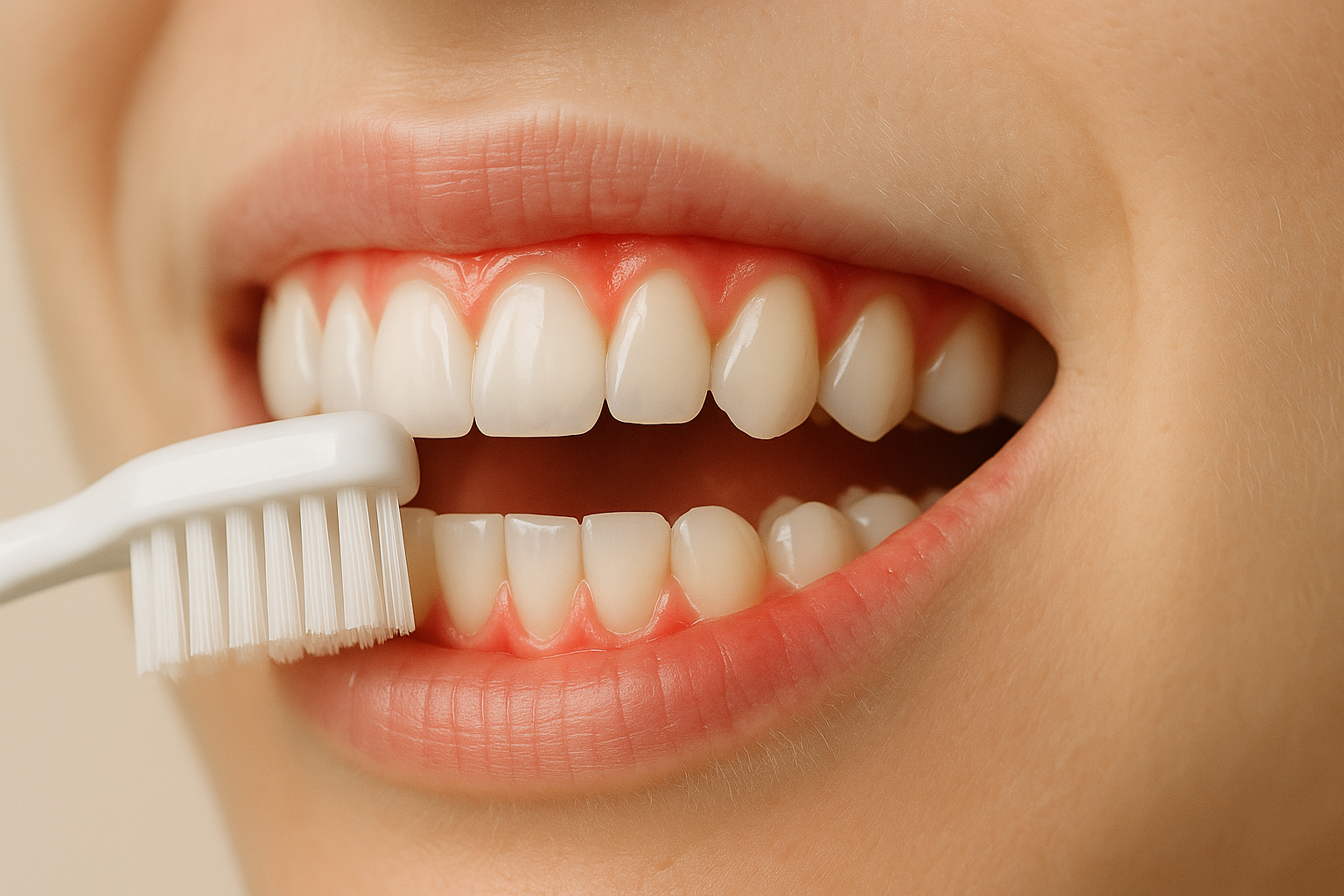
Why do gums often look red right after you brush?
If your gum line looks red minutes after you finish, you’re not alone. The most common reason is simple: plaque can linger right where the gum meets the tooth and between teeth, even after a well‑meant scrub. Mature dental plaque isn’t a flat smear; it forms a structured biofilm with channels that help it persist in sheltered spots—especially at the gum edge and around crowded teeth. That architecture helps explain why a fast brush can leave the margin looking reactive (PubMed: 20195365).
Technique plays a big role. Firm bristles, high pressure, long sawing strokes, or snapping floss can rough up the delicate margin and leave it looking flushed. I see this most often in conscientious brushers who double down on force rather than improving angle and stroke control.
Products matter as well. A new, stiffer brush head, a whitening paste with higher abrasivity, or a gritty DIY powder can all exaggerate the post‑brush color change. Add hurried flossing that “pops” into place, and the small gum triangles (papillae) may look redder for the next hour. The upside: small, focused adjustments usually produce a visible improvement quickly.
What other changes tend to appear with a red gum line?
Redness rarely arrives alone. You might notice tenderness on brushing, a puffy edge around certain teeth, or a fuzzy film on waking. Those clues point toward plaque hanging around and technique that needs gentle refinement. Trace bleeding on the brush or in the sink can occur during cleaning—this commonly settles with steady, thorough brushing and interdental cleaning over days to weeks, but take it as a signal to improve consistency and precision. For general background, the NHS provides a clear overview of gum problems and prevention (NHS: Gum disease).
Some people also feel brief twinges with hot, cold, or sweet where the gum edge has receded slightly. Those exposed areas respond more to friction; that’s your cue to soften bristles, lighten pressure, and shorten your strokes rather than skipping the area.
Breath changes can accompany a redder gum line. If your mouth feels less fresh by midday or a white/yellowish film collects on the tongue, you’re likely dealing with a maturing biofilm and need more meticulous daily disruption—especially between teeth and along the gum margin.
Could your brush or paste be contributing today?
Often the immediate trigger is a mix of tool choice and technique. The fastest wins come from softening what touches the gum line and improving angulation.
Bristles and pressure. Choose soft, end‑rounded bristles and let them glide. Try holding the handle with just your fingertips; if the bristles are splaying, you’re pressing too hard. Power brushes with pressure sensors can be a great coach; many people discover they’ve been pushing far harder than needed.
Abrasivity matters. Some whitening or smoker’s pastes lift stains with higher abrasivity. Those can make a freshly brushed margin look more reactive. If you suspect this, rotate to a gentler, lower‑abrasivity paste for two weeks and reassess the look and feel.
Ingredients that some mouths don’t love. Sodium lauryl sulfate (SLS, a foaming agent), strong flavorants (notably cinnamon or intense menthol), and certain preservatives can prompt a redder look in sensitive users. If that sounds like you, try an SLS‑free, flavor‑mild paste. Overusing gritty powders or DIY mixes (especially heavy baking soda blends) can roughen surfaces and aggravate the gum edge.
Not sure where to start? The American Dental Association offers consumer guidance on choosing brushes and pastes you can trust (ADA: Consumer products). When in doubt, bring your products to your next appointment and ask your clinician for tailored advice.
How do diet, stress, hormones, and age influence gum color?
Diet patterns. Frequent sugary or ultra‑processed snacks feed oral biofilm and can leave the gum edge looking less calm after brushing. Building meals around fiber‑rich produce, whole grains, and lean proteins supports a cleaner mouth between brushes. Vitamin C‑rich foods (peppers, citrus, berries, kiwi) and crunchy vegetables promote a fresher feel and a steadier, pinker look over time. Hydration matters too; consistent sips of water help maintain a comfortable oral environment between cleans.
Stress and sleep. Stress and short sleep can shift saliva flow and daily habits, making plaque build faster and the gum line look redder after the same routine. Protect your sleep window, keep a short daily movement habit, and add brief breathing practices. Many people report a visible difference in a week or two when they combine these with better technique.
Hormonal shifts. Puberty, menstrual cycles, pregnancy, and menopause can heighten the gum margin’s sensitivity to everyday plaque. Your brushing may not change, yet the color can. Gentle technique and daily interdental cleaning are your best friends during these windows. For impartial background on gum conditions and risk factors, see the CDC overview (CDC: Periodontal conditions).
Ageing realities. With age, enamel thins slightly and gums can recede, exposing areas that respond more to brushing. Stay engaged—avoid skipping those spots. Instead, use softer bristles, lighter pressure, short strokes, and careful interdental tools. For context on age‑related changes, see Carvalho & Lussi (PubMed: 28032898).
What quick steps calm that post-brush redness now?
When you want a calmer look today, think friction control and precision. These steps are fast, simple, and friendly to the gum line.
- Rinse gently with cool water. Avoid vigorous swishing, which adds friction. A light, cool rinse feels comfortable without extra scrubbing.
- Change your grip and angle. Hold the brush with fingertips, not a clenched fist. Angle bristles about 45° toward the gum line and use small, short strokes. Count to five per area rather than scrubbing back and forth.
- Pick a mild, SLS‑free paste for a week. If a whitening or smoker’s paste seems to make your margin look redder, pause it and reassess after 7–14 days.
- Clean between teeth slowly. Glide floss in a C‑shape against each tooth or use soft, correctly sized interdental brushes. Snapping causes nicks and sudden color changes.
- Hydrate and space snacks. Water between meals helps comfort. Reducing frequent sugary sips or bites starves biofilm of constant fuel.
In practice, the single fastest win is lighter pressure with better angulation. People often report cleaner‑feeling teeth and a calmer‑looking margin within a day or two once they stop scrubbing and start guiding the bristles.
Which long-term habits keep gums looking naturally healthier?
Consistency over intensity. Twice‑daily brushing plus daily interdental cleaning is the cornerstone. Because mature plaque is a structured biofilm, regular, gentle disruption beats occasional hard scrubbing. That’s why steady use of a soft manual brush—or a gentle power brush—usually outperforms sporadic “deep cleans” (PubMed: 20195365).
Dial in your diet rhythm. Build meals rather than grazes. Emphasize vegetables, fruits, whole grains, and proteins while trimming frequent sugary drinks and snacks. Over a few weeks, these changes commonly show up as a pinker, naturally healthier‑looking gum line and a fresher feel.
Protect moisture. If medications or mouth‑breathing leave you dry, sip water, consider a humidifier at night, and use sugar‑free gum or lozenges to encourage saliva. A moist mouth feels cleaner and is easier to maintain.
Schedule regular checkups. Periodic professional cleanings and timely home‑care tweaks keep you on track. For families, preventive measures such as sealants for decay‑prone grooves can help children while you focus on day‑to‑day habits (Cochrane review, PubMed: 35146744). The NIDCR also provides accessible background on gum health.
When should you book a dental visit? Arrange an appointment if gum redness persists beyond two weeks despite gentler technique, or you notice frequent bleeding during cleaning, ongoing tenderness, breath that stays stale, new sensitivity, pregnancy‑related changes, or a new medication that seems to affect your mouth. Visible gum recession or any tooth looseness also deserves a professional look.
Can rinses and pro options support without overdoing it?
Short‑term rinses for freshness. Evidence‑based mouthrinses can support a cleaner feel; alcohol‑free options are often more comfortable for dry mouths. Systematic reviews compare rinse types and usage patterns (PubMed: 39133629), but remember: rinses complement brushing and interdental cleaning—they don’t replace them. [1]
Botanical options. Extracts such as Azadirachta indica (neem) have emerging data for comfort in sensitive mouths (PubMed: 39554682). If you know you’re reactive to flavors or botanicals, patch‑test or introduce gradually. [2]
Keep it simple. Overcomplicated programs can leave your mouth dry or irritated. A straightforward routine—gentle, thorough brushing; daily interdental cleaning; a paste your mouth likes; an optional rinse or supportive concentrate; and regular checkups—covers nearly all bases. If unusual or persistent gum redness appears alongside stomach troubles, discuss it with your clinician—rare links to gastrointestinal issues such as H. pylori have been reported (PubMed: 29869386).
FAQs: what else do people ask?
Is it normal for gums to look red right after brushing?
Yes—especially if plaque has built up along the gum edge or you’ve brushed with firm pressure. With a softer brush, lighter technique, and careful cleaning between teeth, many people see a calmer look within days. If redness lingers beyond two weeks, check in with your dentist.
Which toothpaste ingredients should I avoid if my gums get red easily?
Try an SLS‑free, lower‑abrasivity paste and go easy on strong flavorants like cinnamon or intense menthol. If whitening pastes make your gum line look reactive, switch to a gentler option for a couple of weeks and reassess.
Do stress and lack of sleep really make gums look worse?
They can. Stress and short sleep can reduce saliva and make plaque build faster, so the gum edge may look redder. Prioritizing rest, hydration, and steady cleaning often makes a visible difference.
How can I tell if my brushing pressure is too high?
Look for splayed bristles, gum tenderness, or a scrubbed feeling. A good check is to hold the brush with just your fingertips and let the bristles glide. Power brushes with pressure sensors are also helpful.
Can diet changes make a visible difference to gum color?
Yes. Fewer frequent sugary snacks and more fiber‑rich vegetables and fruits support a cleaner mouth and a calmer‑looking gum line. Vitamin C from foods like peppers, citrus, and berries is especially helpful.
What’s the best way to clean between teeth without making gums look redder?
Use floss or small, soft interdental brushes with slow, controlled movements. Glide rather than snap. If you’re unsure which size interdental brush fits, ask your dental professional to size you at your next visit.
For a broader guide to everyday gum care, you may also like: How Can I Make My Gums Healthy Again? You’ll find step‑by‑step routines, tool comparisons, and simple adjustments that make a visible difference.
| Metric | Finding | Source |
|---|---|---|
| Gum disease prevalence (US adults) | 47.2% | CDC, 2024 |
| Adults with severe periodontitis | 9.0% | CDC, 2024 |
| Link to systemic health | Established association | NEJM, 2017 |